

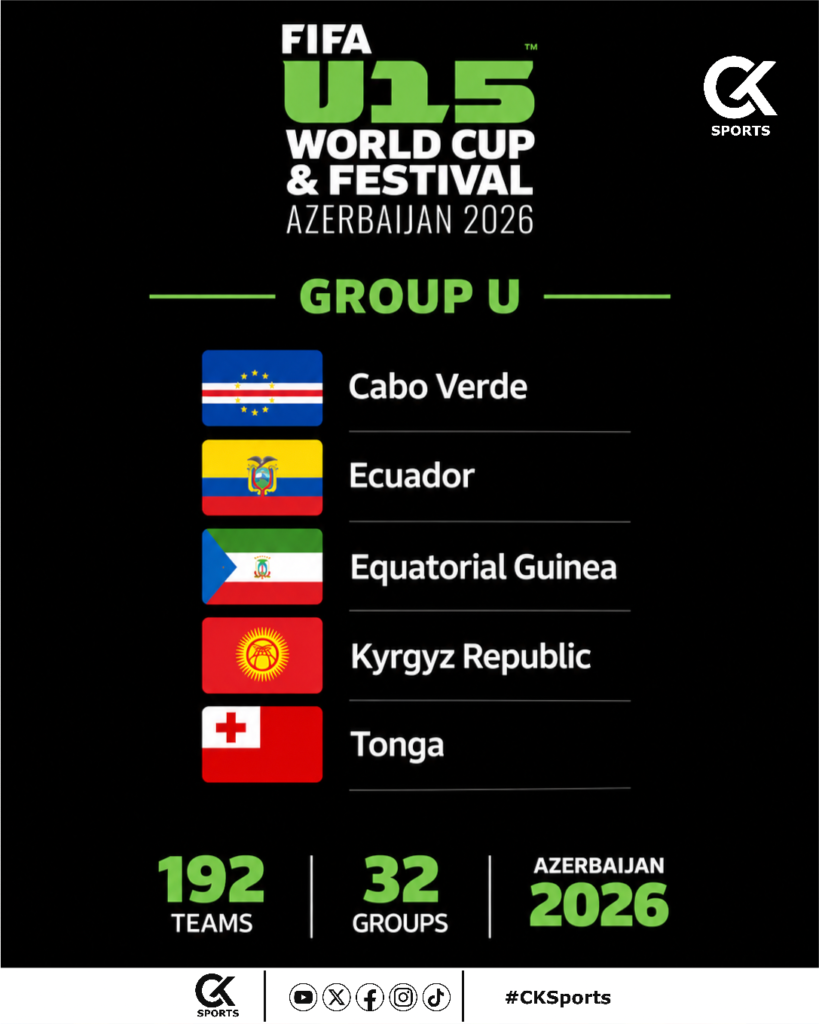
Uganda’s next generation of footballers will face opposition from four continents after being drawn in Group U of the inaugural FIFA U-15 World Cup and Festival 2026 in Azerbaijan.
Uganda have been grouped alongside Cabo Verde Ecuador, Equatorial Guinea, Kyrgyz Republic and Tonga for the new global youth competition.
The inaugural competition brings together 192 teams, divided into 48 groups of six, giving FIFA Member Associations from across the world an opportunity to participate on the global stage.
The first matches will be played from October 24, with FIFA opening the tournament to its Member Associations regardless of their size or football traditions.
For Uganda, the competition presents youngsters with an unusual opportunity to encounter different football cultures at an early stage of their development.
They will meet fellow African sides Cabo Verde and Equatorial Guinea, while Ecuador provides South American opposition.
Kyrgyz Republic represents Asia, while Tonga brings a completely different challenge from Oceania.
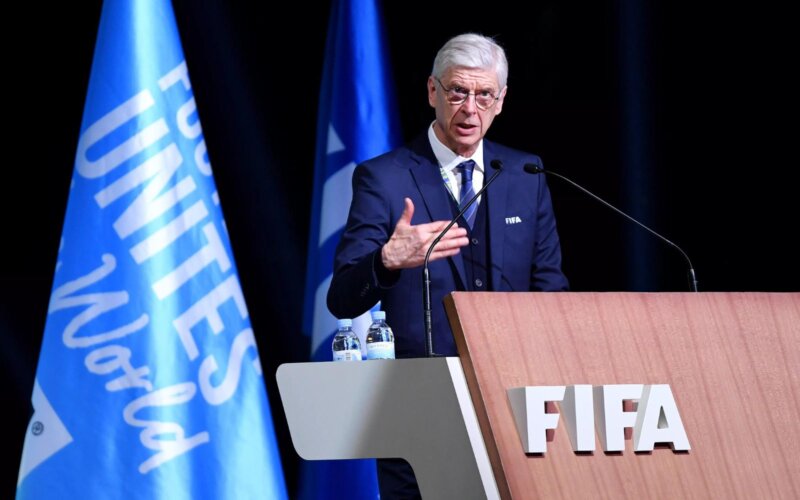
FIFA Chief of Global Football Development Arsène Wenger believes such diversity is precisely what the new competition is designed to provide.
“The only way to know how good you are is to give everybody a chance to do that and compete with everybody else,” Wenger said.
The former Arsenal manager believes bringing young footballers together can also encourage Member Associations to place greater emphasis on youth development and education.
“I believe it will also be an encouragement for all the MAs to realise that education is a very important part of success and that will encourage them to develop their youth even more,” Wenger said.
Beyond competition, Wenger views the tournament as an opportunity to bring youngsters from different backgrounds together through football.
“We always say at FIFA that football unites the world, but the ingredients for doing that are certainly at youth level, and to get the whole world together,” he said.
The competition will use an 8-a-side format, with matches played over 2×20 minutes.
Wenger believes the shortened format should give players more opportunities to experience the ball and different match situations.
“The more you have experiences with the ball, the more you experience game situations, the better it is for your development,” Wenger said.
“It can reduce a bit the difference between the smaller countries and the bigger countries.”
The format is also designed to allow teams to play several matches during the competition, increasing exposure for youngsters who may have limited opportunities for international football at this age.
“You can play one game in the morning, one game in the afternoon and get everybody to experience that,” Wenger explained.
For Uganda, those experiences could prove particularly important as the country continues developing players for its national youth and senior teams.
The tournament also represents the beginning of a broader FIFA programme.
The inaugural boys’ competition will be followed by the first girls’ edition in 2027, before FIFA plans to stage both tournaments annually from 2028.
For Wenger, however, measuring young players against opponents they would rarely encounter remains one of the tournament’s biggest attractions.
“It can also allow us to play the smaller countries against the bigger countries, and after, in the second part of the competition, play the smaller countries against each other,” he said.
“So, it will be a great experience to see and overall, it will be a very exciting tournament.”
Azerbaijan will offer more than an opportunity to chase results, it will provide a rare early measure of the country’s emerging talent against players from different football systems around the world.
The inaugural boys’ competition will be followed by the first girls’ edition in 2027, before FIFA plans to stage both tournaments annually from 2028.