

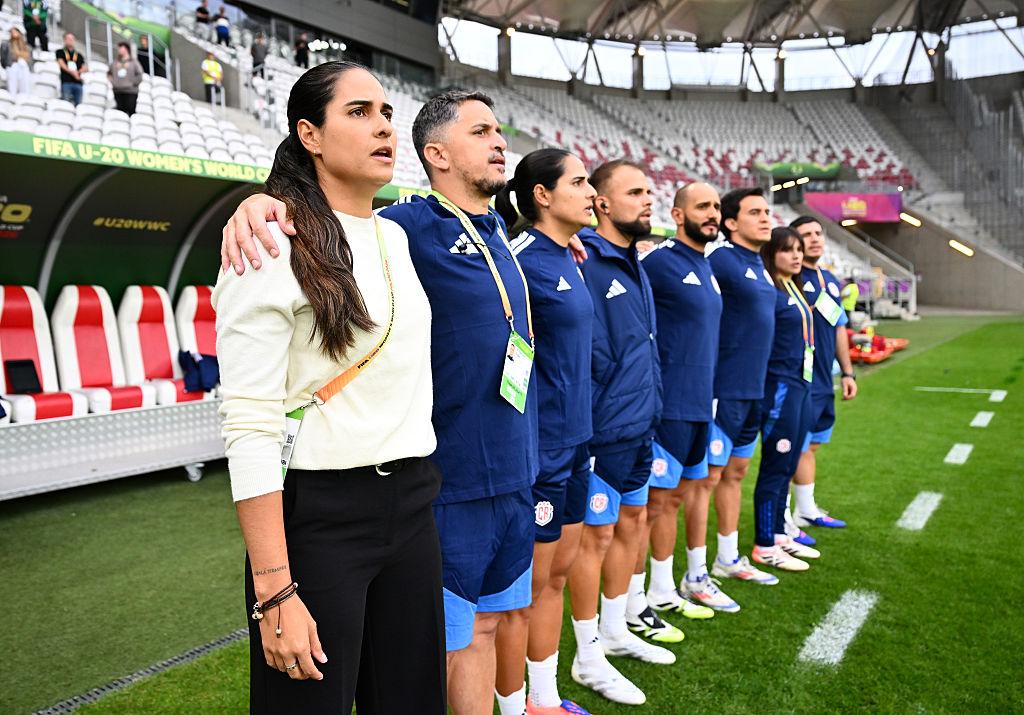
FIFA has begun implementing a landmark regulation requiring female representation within technical teams at all its women’s competitions.
The regulation is making its debut at the ongoing FIFA U-20 Women’s World Cup in Poland, which runs from September 5 to 27.
Under rules approved by the FIFA Council in March, every participating team must have a female head coach or at least one female assistant coach.
Each team must also have at least one female member of its medical staff and two female officials seated on the bench.
The regulations apply across FIFA’s youth, senior national-team and club competitions and will extend to the 2027 Women’s World Cup in Brazil.
United States senior women’s coach Emma Hayes believes the intervention is important, although she wants football to eventually go further.
“I think it’s great. I think we have to go one step further, though,” Hayes said.
She believes opportunities should extend across the entire technical structure surrounding a team.
“Whether you’re a physio, whether you’re a doctor, whether you’re an analyst, whether you’re sitting behind the camera, I think creating opportunities for women is central.”
Hayes said access remains especially important because women’s football is still developing professionally compared with the men’s game.
“Providing access for female coaches to develop is critical,” she added.
FIFA approved the regulation amid concern over the limited number of women occupying elite coaching positions.
Only 12 of the 32 teams at the 2023 Women’s World Cup had female head coaches, according to FIFA.
Poland 2026 provides the first test of FIFA’s attempt to guarantee women positions inside technical areas rather than relying entirely on individual federations.
The tournament features 24 countries competing across Bielsko-Biała, Katowice, Łódź and Sosnowiec.
Africa is represented by Benin, Ghana, Nigeria and Tanzania, with Benin and Tanzania among six countries making their tournament debuts.
The rule is being accompanied by coach education and mentorship programmes designed to increase the number of qualified women available for senior positions.