

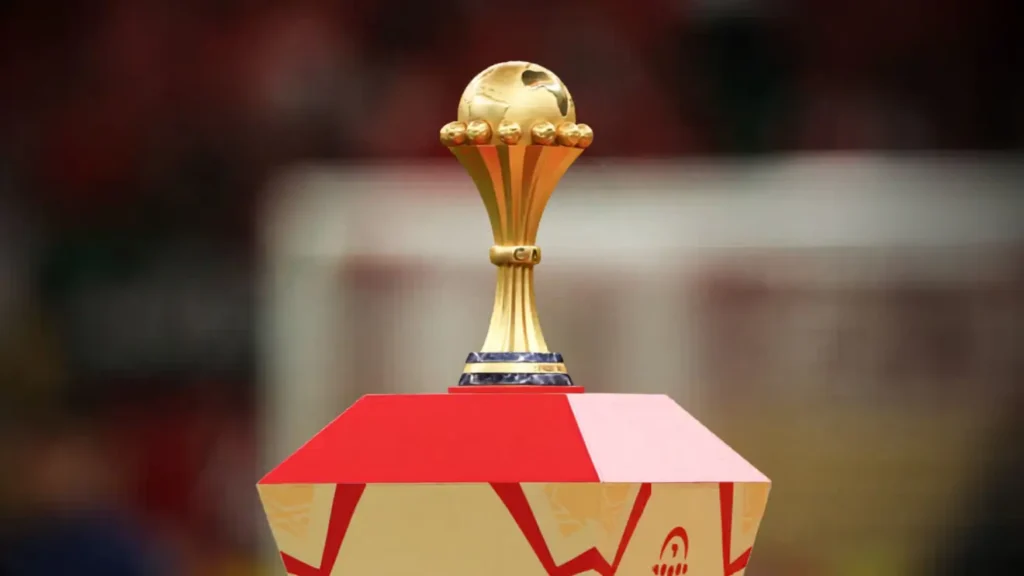
KAMPALA. Caf has restored the Africa Cup of Nations to a two-year cycle after acknowledging its proposed replacement could not immediately deliver the money African football needs.
Thursday’s reversal highlights the financial importance of Afcon, which accounted for 63% of Caf’s income in the 2023/24 financial year.
For Uganda, Kenya and Tanzania, preparing to host the 2027 edition, that dependence adds financial significance to East Africa’s biggest football assignment.
Caf president Patrice Motsepe said the decision was aimed at “advancing, protecting and promoting the interest of African Football”.
The executive committee unanimously reversed last year’s decision, with the proposed Africa Nations League’s ability to generate sufficient funding among its concerns.
“We were also concerned by the several years required,” Motsepe said, explaining the time needed for the proposed competition to deliver substantial financial contributions.
The Nations League was intended to mirror Afcon and take place every 2 years, but Caf acknowledged its commercial development would take time.
Motsepe said the reversal also considered Caf’s 54 member associations and African players employed by clubs outside the continent.
The money behind the decision
Caf’s 2023/24 annual report demonstrates the scale of the financial contribution a replacement competition would have needed to match.
The governing body recorded total revenue of $166.4m, with Afcon generating $95m from television, media and sponsorship rights, alongside $10m from tickets.
Caf reported a $9.5m profit that year and said 83% of overall revenue was reinvested in football and related activities.
Across its competitions, prize money and host association support accounted for $81.1m, while competition organisation absorbed a further $20.9m.
These figures illustrate why the scheduling debate extends beyond national-team fixtures: tournament earnings support a much wider programme of expenditure.
The following financial year demonstrated how sensitive Caf’s accounts remained to the timing of its biggest competitions and their associated income.
Its 2024/25 activity report recorded unaudited revenue of $88.8m, down 47%, and an unaudited loss of $43m.
Caf principally attributed that deterioration to postponements moving Chan and Afcon revenue into the 2025/26 financial year, delaying its recognition.
Despite the decline, football development spending increased by 23% to $47.6m, demonstrating that financial commitments continued while tournament income shifted.
A tournament supporting wider ambitions
Caf’s 2025/26 budget projected an Afcon contribution of $113.8m in profit, underlining the tournament’s importance beyond its own operational costs.
Across the organisation, the budget anticipated revenue of $312.85m, expenditure of $284.39m and an overall surplus of $28.46m.
Planned expenditure included $125.35m in competition prize money and $57.8m for member association and zonal union development.
These figures were projections, rather than confirmed results, but they show the scale of Caf’s ambitions and its need for dependable income.
What follows Pamoja
Motsepe confirmed that East Africa’s 2027 tournament would be followed by editions in 2028, 2031 and 2033, creating a transitional calendar.
The sequence includes consecutive tournaments followed by a three-year gap, before the restored two-year rhythm emerges between 2031 and 2033.
He linked the absence of a 2030 edition to avoiding the World Cup year, citing what he described as Fifa tradition.
The statement offered no revised launch date for the Nations League or explanation of whether it would proceed under another format.
For East Africa’s organisers, Pamoja will carry more than the responsibility of delivering matches, welcoming visitors and showcasing the region.
It will also stage a competition whose established earning power remains central to financing African football’s wider development.