

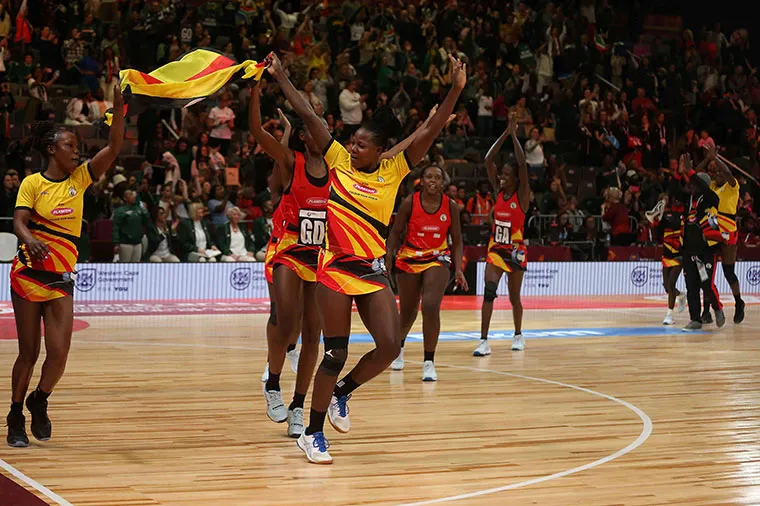
For years, South Africa stood comfortably above the rest of African netball, while Uganda’s She Cranes were largely viewed as one of several teams attempting to close the gap, that picture is changing.
When the 2026 Africa Netball Cup gets underway at Nairobi’s Kasarani Indoor Arena from September 19-26, South Africa and Uganda will arrive as Africa’s two highest-ranked nations and increasingly familiar rivals for the continent’s biggest prizes.
South Africa are fifth in the latest World Netball rankings, immediately followed by Uganda in sixth.
Both have already qualified for the 2027 Netball World Cup in Sydney, making Nairobi less about qualification and more about continental supremacy.
History still favours the Proteas, but Uganda have accumulated enough titles and significant victories to make their meetings increasingly important.
The She Cranes are chasing a fourth African crown after triumphing in Botswana in 2014, Uganda in 2017 and Zambia in 2018.
Their 2017 success was particularly significant, with Uganda going unbeaten at Lugogo before successfully defending the title the following year.
South Africa have since regained control
The Proteas became record five-time African champions in 2025 after defeating Uganda 56-34 in the final in Lilongwe, retaining the crown they had won against the She Cranes in Namibia a year earlier.
South Africa won that 2024 final 65-50, meaning Uganda have now finished runners-up to the Proteas in successive editions.
Those results have increasingly positioned the She Cranes as the team standing between South Africa and continued continental dominance.
However, this should not yet be mistaken for an even rivalry, ahead of the 2024 Africa Netball Cup final, South Africa held a 15-4 advantage from the previous 19 meetings between the countries.
What has changed is Uganda’s ability to beat them on major international stages? At the 2022 Commonwealth Games in Birmingham, the She Cranes defeated South Africa 54-48 in the fifth-place playoff.
A year later, they met twice at the 2023 Netball World Cup in Cape Town. Hosts South Africa edged the first encounter 52-50 during the second preliminary stage after Uganda fought back to level the contest at 42-42 in the final quarter.
Three days later, the She Cranes responded with fifth place at the World Cup at stake, Uganda defeated South Africa 49-47 in front of their home crowd.
Mary Cholhok scored 29 goals as Uganda finished fifth, their highest placing in Netball World Cup history, while South Africa settled for sixth.
Those two matches provided perhaps the clearest indication of how close the countries had become.
Across 120 minutes of World Cup netball, both teams scored exactly 99 goals. South Africa won the first meeting by two, before Uganda won the second by the same margin.
Their rivalry continued at the 2026 Commonwealth Games in Glasgow, where they again contested fifth place.
Uganda led 17-12 after the opening quarter, but South Africa recovered to win 62-54 and regain the bragging rights.
The frequency of those high-stakes encounters is gradually changing the relationship between the two sides.
Malawi have traditionally been another major African force, but Uganda’s rise to sixth in the world rankings has created a clearer battle immediately behind South Africa.
The Proteas remain the benchmark, Uganda are increasingly the team trying to dislodge them, that gives this year’s Africa Netball Cup added significance.
South Africa have rested several senior players following the Commonwealth Games, with coach Jenny van Dyk using Nairobi to test combinations and increase squad depth ahead of the 2027 World Cup.
Retaining the African title, however, remains their objective much as Uganda arrive with a different challenge.
The She Cranes are pursuing their first African crown since 2018 and will do so without Mary Nuba, who has remained in Australia to concentrate on her club commitments ahead of the 2027 Suncorp Super Netball season.
That places greater responsibility on a squad trying to prove Uganda’s position immediately behind South Africa is more than just a ranking.
A fourth African title would end the She Cranes’ eight-year wait and move them within one championship of South Africa’s five.
Another Proteas triumph would widen that gap and reinforce the continental order Uganda are increasingly threatening to disrupt.