

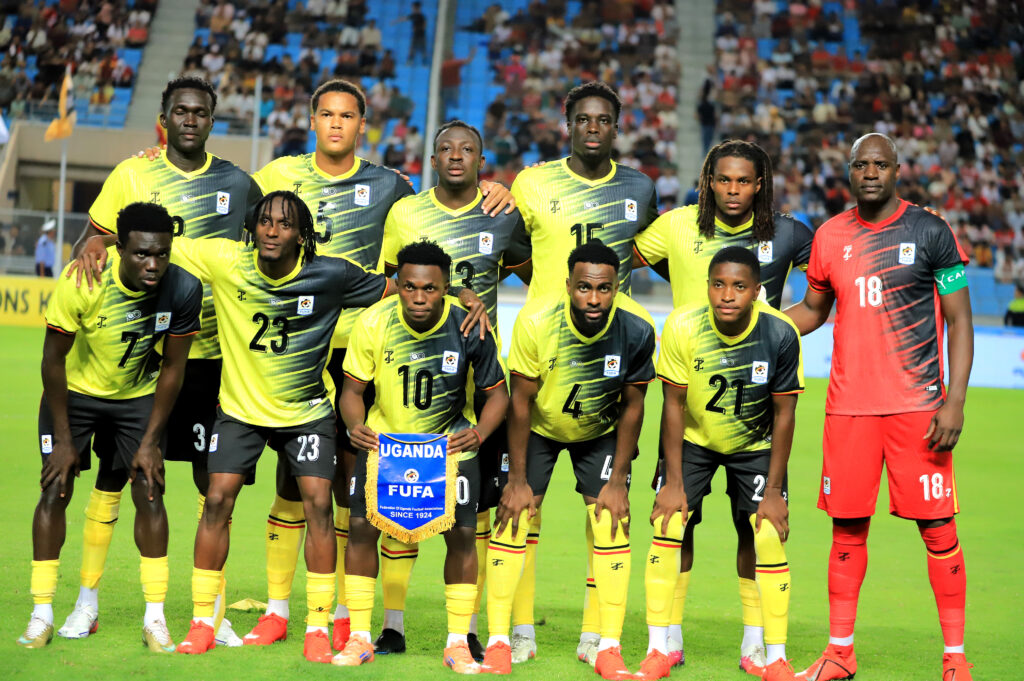
FUFA’s decision to widen its search for heritage players has opened another route through which Uganda hopes to strengthen the Cranes ahead of the 2027 Africa Cup of Nations.
The federation revealed that consultants had identified more than 200 professional footballers worldwide considered eligible or potentially eligible to represent Uganda.
From that pool, 20 players were recommended to the Uganda Cranes technical team, with nine joining the squad ahead of Tuesday’s AFCON qualifier against Libya in Hoima.
FUFA says the programme involves scouting professional players who can represent Uganda under FIFA regulations and Uganda’s national laws.
But having a Ugandan parent or grandparent does not automatically mean a player can immediately represent the Cranes in a competitive international.
Nationality is the starting point
Under Article 10(b) of Chapter Three of Uganda’s Constitution, a person born inside or outside Uganda is a citizen by birth if one of their parents or grandparents was a Ugandan citizen by birth at the time of their birth.
The same principle is reflected in Section 12(b) of the Uganda Citizenship and Immigration Control Act, giving players with a qualifying Ugandan parent or grandparent a legal pathway to citizenship, subject to the required documentation.
Mosta goalkeeper David Udoh Akpan, for example, has been linked to Uganda through his grandmother Auma, whom FUFA says was born in Busia.
Dieudonne Debohi’s maternal grandmother was born in Majanji, while Souleyman Diaby’s maternal grandfather is from Masaka.
Kingdom Osayi has a maternal grandmother born in Kaberamaido, while Kelvin Boateng also has a Ugandan grandparent.
Abdoulaye Sissako’s connection comes through his grandmother, who was born in Kampala.
Once that connection is established, FUFA must provide the necessary documents proving the relationship between the player and the Ugandan parent or grandparent.
These can include birth certificates, passports, citizenship records and other documents showing the family link.
FIFA’s eligibility framework is contained in its regulations governing the application of the FIFA statutes, supported by guidance on eligibility to play for representative teams and requests for a change of association.
FIFA updated both guidance documents on September 10, 2026, clarifying the evidence member associations must provide, while Article 8 specifically governs changes of association.
The process becomes more complicated when a footballer has already represented another country.
Noble Okello is one of the clearest examples among Uganda’s latest recruits. Born and raised in Canada to parents of Ugandan descent, Okello represented Canada at youth level and also made two senior appearances in 2020.
After completing the required international switch, the midfielder became eligible for Uganda and made his Cranes debut against Tunisia in the opening 2027 AFCON qualifier in Radès on September 24, 2026.
A change of association allows an eligible player to switch his sporting nationality from one FIFA member association to another if the relevant conditions are satisfied.
While such an application is being processed, the player cannot represent either association until FIFA makes a final decision.
Uganda is not the first African nation to aggressively explore its diaspora, Ghana offers one of the clearest recent examples.
Ahead of the 2022 World Cup, the Ghana Football Association secured the services of several dual-national players after months of engagement with players and their families.
Iñaki Williams, Tariq Lamptey, Stephen Ambrosius, Ransford-Yeboah Königsdörffer and Patric Pfeiffer were among those brought into the wider Black Stars pool.
Williams had previously represented Spain, while Lamptey had played for England at youth level.
Morocco have also built heavily around players developed abroad, Hakim Ziyech, Sofyan Amrabat, Achraf Hakimi and Noussair Mazraoui were all developed largely in European football systems before becoming key figures for Morocco.
That diaspora base played an important role as Morocco reached the semi-finals of the 2022 World Cup.
Senegal have followed a similar path, Kalidou Koulibaly was born in France and represented France at Under-20 level before choosing Senegal.
He later became captain and helped the country win the Africa Cup of Nations in 2022 and 2025.
FUFA says engagement and documentation remain ongoing for some of the players among the 20 identified by the Cranes technical team.
Only after those requirements are completed can a player move from Uganda’s worldwide search to becoming eligible to represent the country in international football.