

Uganda’s preparations for the 2027 Africa Cup of Nations have come under fresh scrutiny after Members of Parliament raised concern over the pace of work at several training facilities earmarked for the tournament.
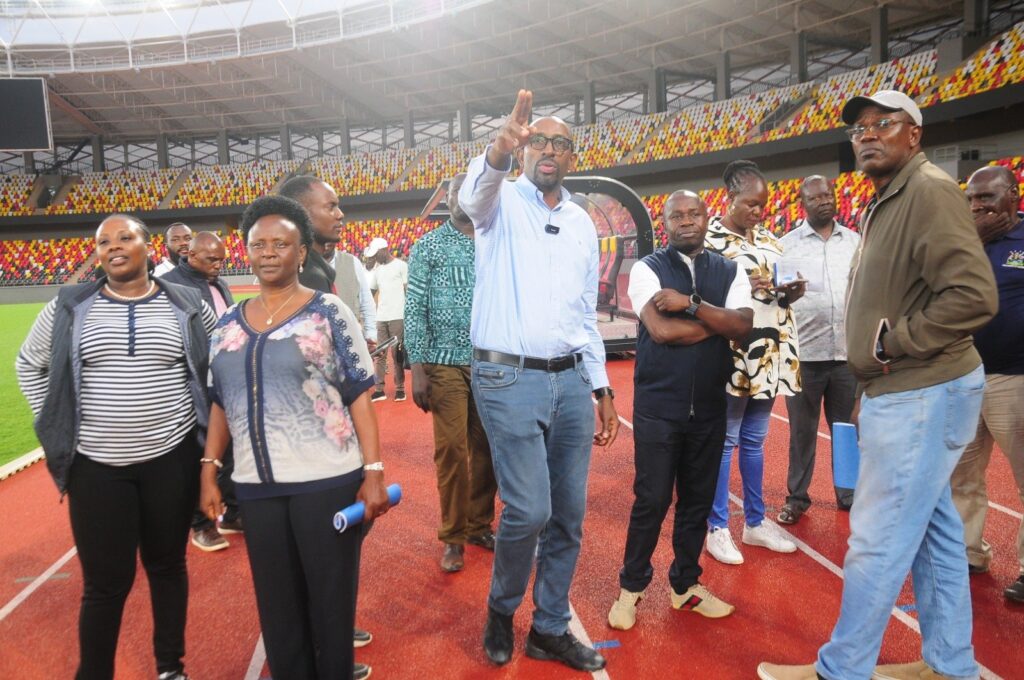
Members of Parliament’s Education and Sports Committee raised the issue during their nationwide familiarisation and oversight tour of sports infrastructure, which reached Masindi and Hoima on Wednesday.
While major stadium projects are progressing, MPs expressed concern that some supporting training grounds are moving considerably slower as Uganda approaches another round of CAF inspections towards the end of the year.
The concern places additional pressure on the UPDF Engineering Brigade, which is handling several projects simultaneously and has now committed to accelerating work to meet the required deadlines.
“The Engineering Brigade, which has to work on multiple fronts concurrently, re-committed to beating the deadlines,” the National Council of Sports said in a statement following the inspection.
NCS said the UPDF had assured MPs that it would do whatever was required to deliver the projects, including working day and night.
The warning comes with Uganda less than nine months away from the opening of AFCON 2027, which it will jointly host with Kenya and Tanzania from June 19.
Government has committed Shs135.7 billion towards the development of nine additional training facilities required for the tournament.
They include Hoima Booma Ground, Masindi King George Stadium, Sir Tito Winyi Secondary School, Pece Memorial Stadium, Gulu University, Lira University, FUFA Kadiba, Makerere University and Kyambogo University.
The latest Local Organising Committee update indicated that 10 of Uganda’s 12 planned training facilities are expected to be ready by December 2026.
FUFA Kadiba and Sir Tito Winyi are scheduled for completion in January 2027 after their sites were handed over later than the others.
However, the parliamentary inspection has highlighted the challenge of converting those timelines into completed facilities.
MPs had already expressed concern during the Lira and Gulu leg of the tour that works at Lira University, Pece Memorial Stadium and Gulu University had not progressed at the same pace as Akii-Bua Olympic Stadium.
Akii-Bua itself has reached 82% completion, according to the latest NCS update.
State Minister for Sports Peter Ogwang has also acknowledged delays at some sites and directed the UPDF to accelerate the works.
Ogwang said he had written to the Minister of Defence seeking changes to supervision at Lira, Gulu and Pece.
“I have written to the Minister of Defence to have the supervisors at Lira, Gulu and Pece leave the sites and bring in serious supervisors,” Ogwang said.
In Masindi and Hoima, the committee inspected King George Stadium, Sir Tito Winyi, Hoima Booma Ground and Hoima City Stadium.
King George is progressing while construction at Sir Tito Winyi has only recently started. The latter is initially being developed as an AFCON training facility, with longer-term plans to turn it into Uganda’s first National Sports Academy.
Hoima Booma is further advanced, while Hoima City Stadium is already operational and has hosted domestic and continental football.
The MPs also raised a longer-term concern over government’s ability to maintain and regularly utilise major facilities such as Hoima City Stadium and Akii-Bua after AFCON.
NCS chairman Ambrose Tashobya and General Secretary Dr Bernard Patrick Ogwel told the committee that plans include recruiting additional staff, engaging experienced firms to manage the facilities and marketing the venues for sporting and commercial activities beyond football.
The parliamentary tour is expected to conclude in Kampala, where MPs will inspect Mandela National Stadium, Namboole and training facilities at Kyambogo University, Makerere University and FUFA Kadiba.
Uganda, Kenya and Tanzania will make history in 2027 when AFCON is staged across three countries for the first time.