

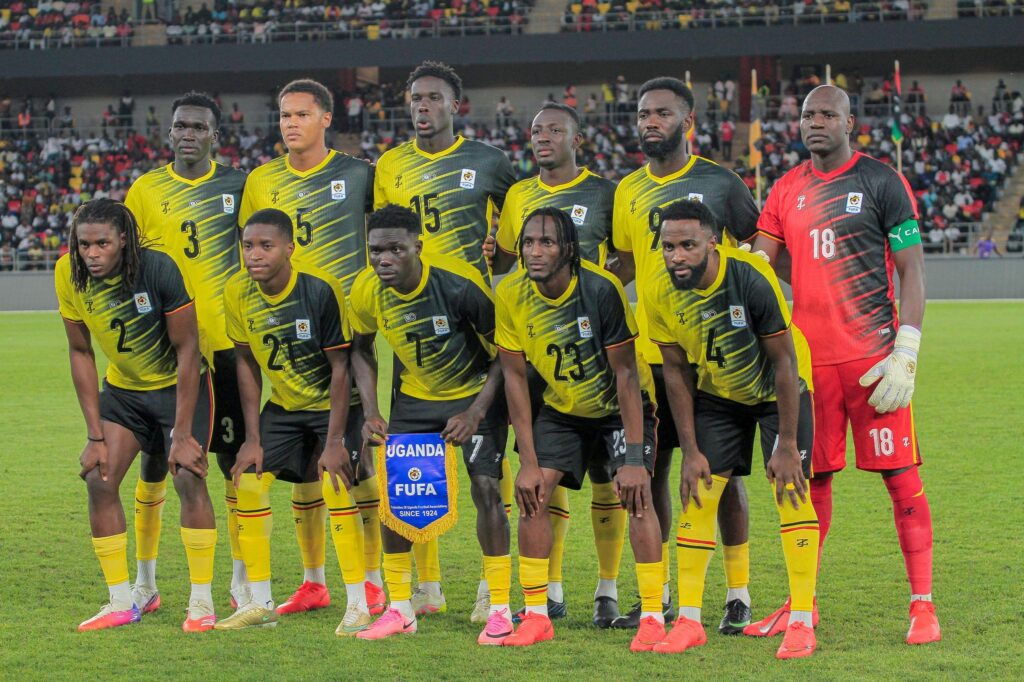
Uganda Cranes coach Paul Put believes his switch to a back three has brought greater defensive stability to the national team.
Put introduced the system against Tunisia before retaining it as Uganda defeated Libya 1-0 at Hoima City Stadium.

Kenneth Ssemakula, Toby Sibbick and Rogers Torach formed the central defensive unit across Uganda’s opening 2 AFCON qualifiers.
Nathan Asiimwe and Aziz Kayondo operated as wing-backs, giving Uganda additional protection defensively and greater width when attacking.
Uganda conceded only once across the 2 matches, drawing 1-1 in Tunisia before keeping Libya scoreless in Hoima.
Put said the tactical adjustment was influenced by lessons from previous matches, particularly regarding organisation, maturity and experience.
“If we look at AFCON and the results, I think we lacked organisation, maturity and experience,” Put said.
“Sometimes you have to compensate when you don’t have enough experience and maturity in crucial positions.”
A back three usually begins with three central defenders instead of the traditional partnership commonly used in a back four.
The system also places considerable responsibility on the wing-backs, who must contribute both defensively and in attacking areas.
When Uganda are defending, Asiimwe and Kayondo can drop alongside the centre-backs, effectively creating a defensive line of five.
That structure reduces spaces around the penalty area while giving the central defenders additional cover against wide attacking movements.
When Uganda gain possession, however, both wing-backs can move higher and provide the width normally offered by traditional wingers.
That allows the remaining attacking players to move into central areas while still stretching opponents across the entire pitch.
The formation can resemble a 5-4-1 without possession before becoming 3-4-2-1 or 3-4-3 when Uganda attack.
For Put, the immediate priority was defensive organisation after assembling a squad containing several relatively new international players.
The Belgium had only two days with the squad before facing Tunisia in Uganda’s opening 2027 Africa Cup of Nations qualifier.
“You have to understand that I had only two days before Tunisia to prepare the team.”
“I was very satisfied because in 2 days we changed the organisation and did it very well against Tunisia,” Put said.
The system also gives Uganda additional protection when one centre-back leaves the defensive line to challenge an opposition attacker.
With three defenders positioned centrally, another centre-back can cover behind while the remaining defender protects the penalty area.
That flexibility becomes particularly important when Uganda attempt to press opponents higher and leave space behind their midfielders.
Against Libya, the system was tested several times during a difficult opening half at Hoima City Stadium.
Denis Onyango produced important saves before Arnold Vula headed Uganda ahead during first-half stoppage time.
Libya increased their attacking pressure after the break, but Uganda remained compact enough to protect their narrow advantage.
“With this kind of setup we are more solid, if you want to go far in a tournament, you must not concede,” Put said.
The system also appears suited to Uganda’s current personnel, particularly with Asiimwe comfortable advancing aggressively from the right side.
Kayondo offers similar energy on the opposite flank while Sibbick provides a physical presence in the middle of defence.
Ssemakula and Torach can also defend wider areas when the wing-backs advance and Uganda temporarily leave spaces outside.
However, playing with a back three carries risks whenever the wing-backs are caught high during turnovers of possession.
Opponents can target the spaces behind them, particularly when Uganda lose possession before the defensive structure becomes organised again.
The midfield becomes important because it must slow opposition counterattacks and allow the wingbacks enough recovery time.
Put stressed that the system will not become Uganda’s permanent tactical identity despite its encouraging start during qualification.
“I told the players we will not keep only one system, we are also going to play our normal system. It depends on which team we are facing,” he said.
That flexibility could become increasingly important as Uganda continues building towards AFCON 2027 alongside co-hosts Kenya and Tanzania.
Tournament football often requires teams to adjust between opponents, game situations and the different threats presented during matches.
For now, the back three has provided Put with greater defensive protection while still allowing Uganda attacking freedom from wider positions.
The upcoming friendlies against DR Congo on October 2nd and 5th will give Put another opportunity to test the system, refine its balance and assess alternative combinations before competitive action resumes.