

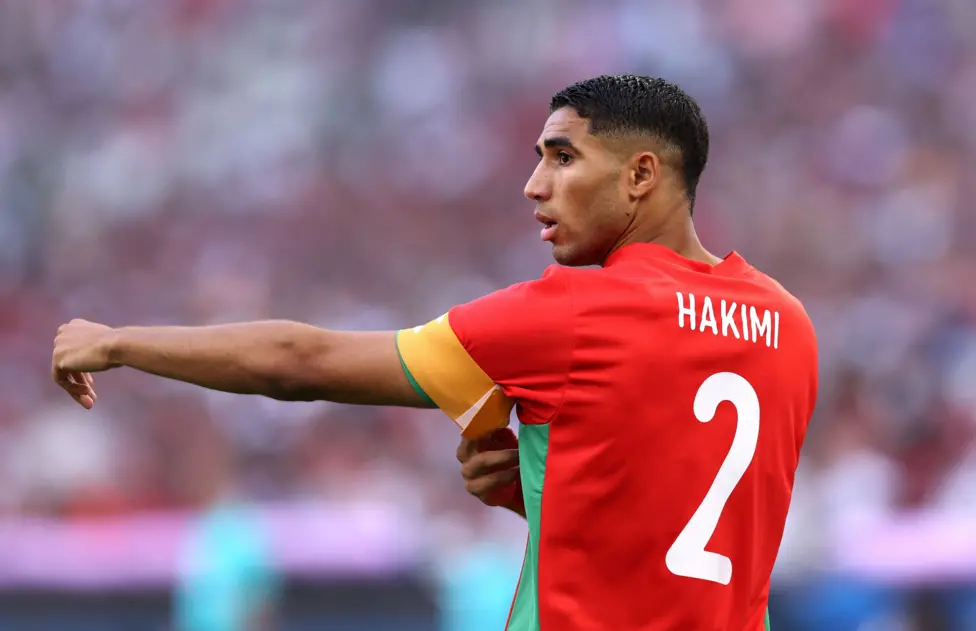
Thirty-one years after George Weah became Africa’s first and only Ballon d’Or winner, Achraf Hakimi carries another credible challenge to end that wait.
The Moroccan captain enters the 2026 conversation after another outstanding season for Paris Saint-Germain and an influential year with the Atlas Lions.
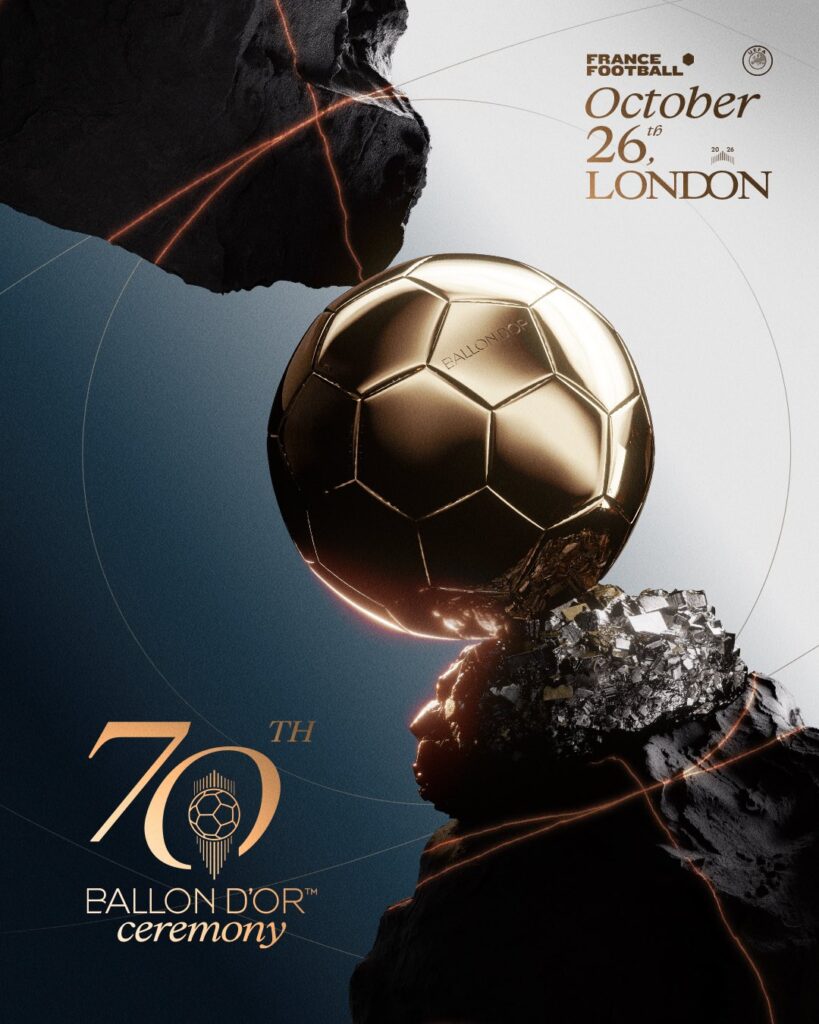
France Football unveils the 30 nominees on Tuesday, before specialised journalists determine who succeeds Ousmane Dembele at the October 26 ceremony in London.
For Hakimi, the regulations governing this year’s award provide an interesting framework through which his credentials can be measured.
France Football says performances between August 3, 2025 and July 19, 2026 will determine the award, incorporating domestic and international competitions.
That period importantly includes both the 2025 Africa Cup of Nations and 2026 World Cup, giving international performances considerably greater relevance this year.
Individual performance, particularly a player’s decisive and impressive influence, is officially listed as the most important consideration for voters.
Collective performances and trophies come second, while class and fair play constitute the third consideration in France Football’s published criteria.
Those requirements provide Hakimi with a compelling case after helping PSG successfully defend their Champions League crown during another trophy-laden campaign.
The 27-year-old has increasingly redefined expectations of a right-back through his ability to influence matches at both ends of the pitch.
PSG credit him with playing an important role as the club secured a second consecutive European crown on May 30.
His international record during the assessment period also gives African voters plenty to consider, despite Morocco falling short of major silverware.
Hakimi helped Morocco reach the Afcon final on home soil before Senegal defeated the Atlas Lions 1-0 AET in the championship decider.
Morocco subsequently reached the World Cup quarter-finals, where their campaign ended against France after another significant run on football’s biggest stage.
Hakimi scored once and provided three assists during the World Cup, while his attacking influence extended considerably beyond those headline numbers.
He attempted 14 shots, completed 118 passes in the final third and registered 41 progressive carries during Morocco’s tournament.
That combination of club success and international influence strengthens his candidacy under both of France Football’s two most important voting considerations.
Africa gets 21 votes
Hakimi will nevertheless require support far beyond Africa because the continent controls only a fraction of the 100 votes available.
France Football appoints one specialised journalist from each country occupying the top 100 positions in the FIFA men’s world rankings.
Based on the ranking in force when the nominations are published, 21 African nations sit inside that bracket and therefore qualify to vote.
They include Morocco, Senegal, Egypt, Nigeria, Algeria, Ivory Coast, Tunisia, Cameroon, Mali, DR Congo and South Africa.
Burkina Faso, Cape Verde, Ghana, Guinea, Gabon, Angola, Uganda, Zambia, Benin and Equatorial Guinea complete Africa’s voting representation.
Uganda retains a voice in deciding football’s most prestigious individual award after remaining comfortably within the global top 100.
Each journalist must rank ten players from the official 30-man shortlist rather than simply selecting one preferred candidate.
A first-place selection earns 15 points, followed by 12 for second and 10 for third, before descending to one point for tenth.
That system means even unanimous first-place support from Africa would never be sufficient by itself to deliver the Ballon d’Or.
Hakimi would need substantial backing across Europe, South America, Asia, Concacaf and Oceania to overcome the leading candidates from other continents.
There is also no requirement for African journalists to favour African footballers, with each voter expected to apply France Football’s published criteria independently.
The 2024 voting demonstrated that reality when African journalists divided their first-place selections among several candidates rather than voting as a continental bloc.
Weah remains alone
Hakimi nevertheless begins from a stronger historical position than most African challengers after finishing sixth in the 2025 Ballon d’Or.
Mohamed Salah finished fourth that year, while Guinea striker Serhou Guirassy was the other African included among the 30 nominees.
Salah has repeatedly approached the leading positions without winning, while Sadio Mane came closest recently when finishing second behind Karim Benzema in 2022.
Before them, Didier Drogba, Samuel Eto’o, Yaya Toure and Riyad Mahrez belonged to generations of African stars who challenged without reaching the summit.
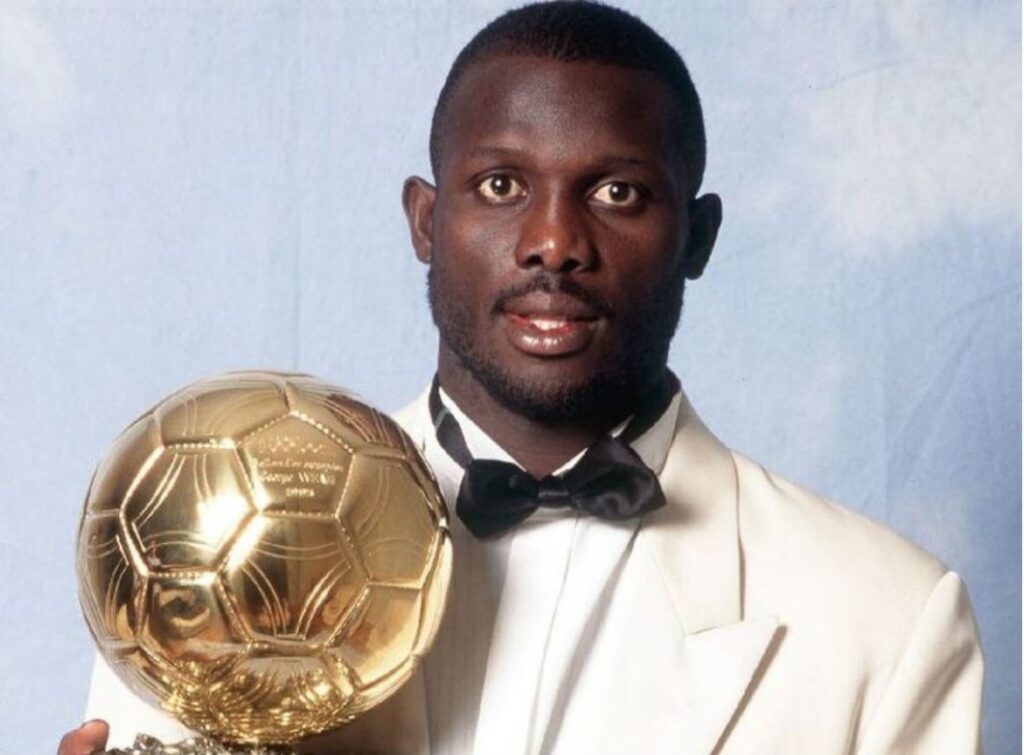
Weah therefore remains alone after winning the 1995 award following his performances for Paris Saint-Germain and AC Milan.
Hakimi now attempts to follow a particularly interesting path because, like Weah, part of his case has been constructed through outstanding performances in Paris.
His challenge is complicated further by playing in defence, with attacking players historically dominating football’s major individual awards.
Yet the official criteria emphasise decisive individual influence rather than goals alone, potentially strengthening the argument for evaluating Hakimi beyond his position.
Thirty-one years after Weah broke Africa’s Ballon d’Or barrier, another African arrives with trophies, international pedigree and a genuine claim.
Whether Hakimi can finally end the wait will ultimately depend on convincing considerably more than Africa’s 21 voices.