


Patrick Vieira will provide the first indication of how he intends to manage Senegal’s changing generation when he announces his maiden squad on Sunday.
The former Arsenal captain is expected to name his players on September 6 for Senegal’s opening 2027 Africa Cup of Nations qualifiers.
The Lions host Mozambique in Diamniadio on September 23 before travelling to face Ethiopia four days later in their second qualifier.
However, Vieira’s selection carries greater significance because Senegal are entering a new cycle following their disappointing exit from the 2026 FIFA World Cup.
Pape Thiaw lost his job after Senegal were eliminated by Belgium in the Round of 32, with the federation subsequently calling for a reorganisation.
Vieira inherits one of Africa’s strongest squads, but must decide how quickly responsibility moves from Senegal’s established stars towards an emerging generation.
Several players who formed the backbone of Senegal’s recent success are now comfortably into their thirties and approaching another important career crossroads.
Captain Kalidou Koulibaly is 35, while goalkeeper Edouard Mendy is 34 and veteran midfielder Idrissa Gana Gueye has reached 36.
Sadio Mané, Senegal’s record goalscorer and arguably the defining player of their most successful generation, is also now 34.
All four remained involved during Senegal’s World Cup campaign, highlighting how heavily the Lions have continued depending upon their experienced core.
Vieira must determine whether that experience remains central to his plans or whether younger players receive greater responsibility immediately.
Reports from Senegal suggest the new coach is already preparing to leave two influential senior players out of his first squad.
Their identities have not been revealed, but Sunday’s announcement should provide the first meaningful evidence of Vieira’s plans for the team.
Young generation knocking
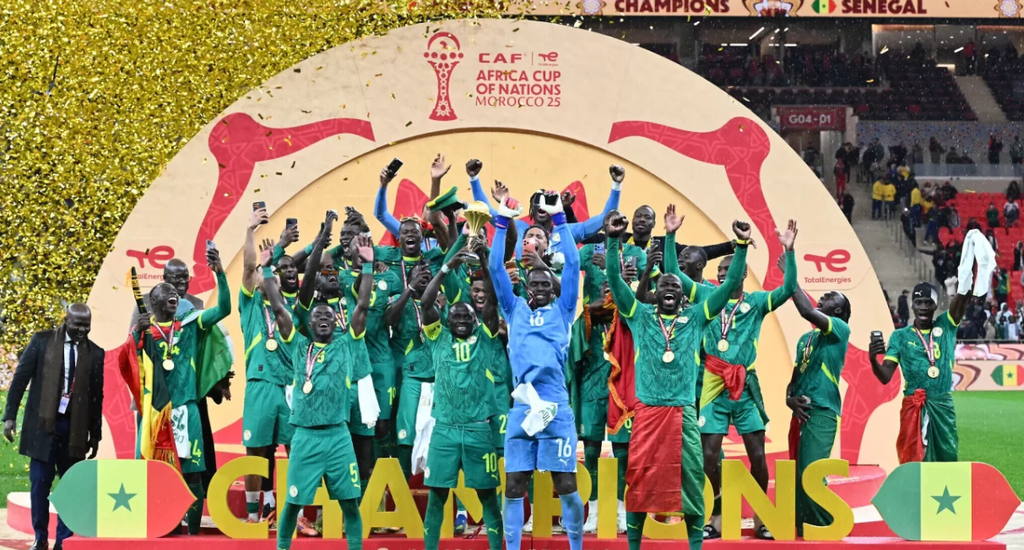
Vieira does not inherit a squad requiring complete reconstruction because Senegal already possess several highly rated players from the next generation.
Lamine Camara, Pape Matar Sarr and Habib Diarra provide younger midfield options capable of gradually assuming responsibilities previously carried by Senegal’s veterans.
Defenders Mamadou Sarr and El Hadji Malick Diouf also represent the future, while Senegal possess exciting younger alternatives further forward.
Ibrahim Mbaye and Assane Diao were included in Senegal’s World Cup plans, while teenager Bara Sapoko Ndiaye earned his place following his emergence at Bayern Munich.
Ndiaye was among the major surprises when Thiaw initially announced an expanded 28-man World Cup squad in May.
Vieira consequently faces a balancing act rather than simply choosing between an ageing generation and a completely new Senegal team.
Experience from players such as Mané and Koulibaly could remain invaluable while younger players gradually assume greater influence within the national side.
However, Senegal must also avoid eventually needing to replace several influential players simultaneously after years of relying upon the same experienced spine.
Sunday’s announcement should provide the first indication of where Vieira believes that balance currently lies.
First international job

The assignment also represents a significant career step for Vieira, who has never previously managed at international level.
Born in Dakar before moving to France as a child, Vieira represented France throughout an illustrious playing career and won the 1998 FIFA World Cup.
He also became one of Arsenal’s greatest midfielders, captaining the famous Invincibles while winning three Premier League titles during his time in England.
His managerial career has included spells with New York City FC, Nice, Crystal Palace, Strasbourg and Genoa before returning to his country of birth.
Vieira now inherits responsibility for maintaining Senegal’s position among Africa’s elite while simultaneously preparing the team for another continental challenge.
The immediate target is qualification for Afcon 2027, which Uganda will co-host alongside Kenya and Tanzania next year.
That tournament could provide one final major continental stage for several members of Senegal’s established generation while introducing their eventual successors.
Sunday’s squad will attract interest extending considerably beyond which players face Mozambique and Ethiopia later this month.
It represents Vieira’s first opportunity to reveal which members of Senegal’s golden generation remain central and who will lead the country’s next chapter.
Senegal’s 2026 World Cup squad
Goalkeepers: Edouard Mendy, Mory Diaw, Yehvann Diouf.
Defenders: Ismail Jakobs, El Hadji Malick Diouf, Krépin Diatta, Antoine Mendy, Kalidou Koulibaly, Abdoulaye Seck, Moussa Niakhaté, Mamadou Sarr.
Midfielders: Habib Diarra, Pape Matar Sarr, Pathé Ciss, Pape Gueye, Lamine Camara, Bara Sapoko Ndiaye, Idrissa Gana Gueye.
Forwards: Sadio Mané, Ismaila Sarr, Ibrahim Mbaye, Assane Diao, Iliman Ndiaye, Cherif Ndiaye, Bamba Dieng, Nicolas Jackson.