

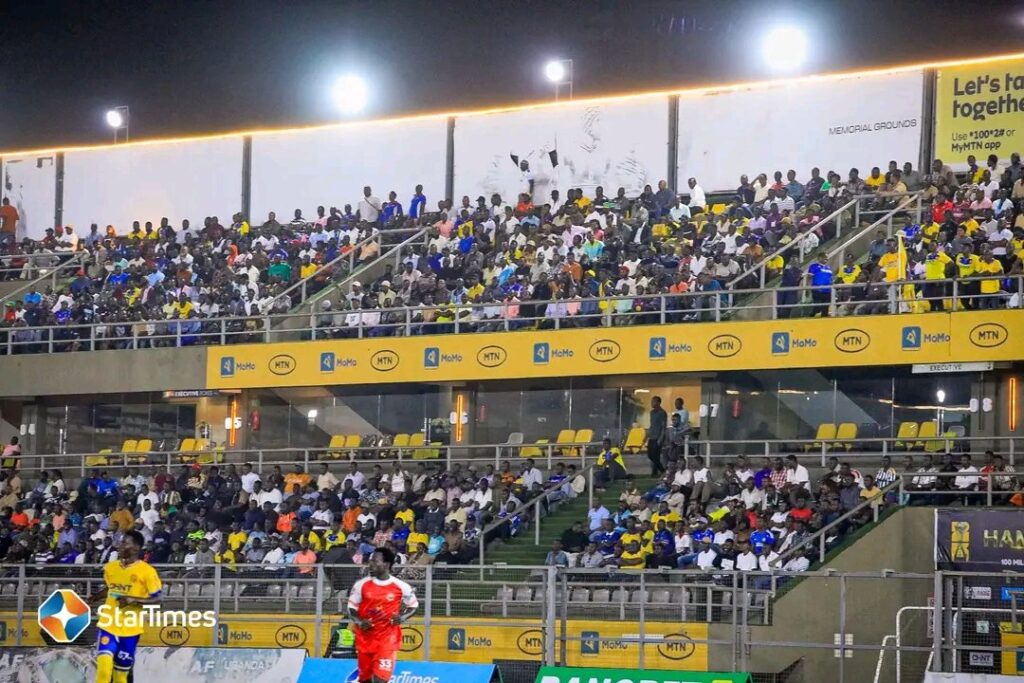
Uganda is routinely described as a football-mad country, yet Uganda Premier League clubs continue struggling to convert that passion into consistent match-going support.
That contradiction raises an important question about whether the UPL genuinely lacks supporters or instead faces problems recruiting, engaging and retaining existing football fans.
The debate followed remarks by FUFA president Moses Magogo, who believes Uganda could develop one of Africa’s strongest leagues with greater local support.
Magogo argued that even 20 percent of Uganda’s population supporting domestic clubs could significantly transform the league and its commercial potential.
Football enthusiast Allan Mutumba agrees that supporters are important, but questions whether fans should carry responsibility for the league’s struggle to attract them.
“In a football-mad country, how are football fans a problem? Unless you have no plan to recruit and retain,” Mutumba said.
His argument points towards an uncomfortable reality because Ugandans already demonstrate considerable willingness to spend their money and time following football.
Supporters purchase European club jerseys, pay television subscriptions, consume football through internet platforms and sometimes travel abroad to watch their favourite teams.
For Mutumba, that existing appetite suggests European football should not become an excuse for struggling attendances and limited supporter engagement within the domestic league.
“They should not blame the European leagues. They run massive budgets to keep us following them,” he said.
The comparison is hardly about expecting Ugandan clubs to match European marketing budgets, but understanding the deliberate effort required to cultivate supporter loyalty.
UPL clubs must therefore create identities, experiences and traditions capable of turning casual football followers into supporters with lasting emotional connections.
Ugandan football already possesses considerable history, although much of that heritage remains underused as a tool for marketing clubs and strengthening supporter identity.
Legends including Phillip Omondi, Paul Hasule, Majid Musisi and Jackson Mayanja remain important figures in Ugandan football history, but their stories offer greater commercial possibilities.
Retro jerseys, documentaries, anniversary celebrations, club museums and appearances by former players could introduce younger supporters to the personalities who built their clubs.
“How can I love and support a game that doesn’t celebrate its roots?” Mutumba asked.
He believes former players could become club ambassadors in schools, universities, workplaces and communities, helping domestic football recruit another generation of supporters.
Merchandise presents another opportunity, particularly when European club shirts remain readily available while official products from several Ugandan clubs can prove difficult to access.
However, attracting supporters is only one part of the equation because clubs must also give those who attend compelling reasons to return.
Matchday entertainment, reliable fixture communication, ticketing, merchandise, supporter engagement and stronger digital storytelling increasingly influence how fans experience their football clubs.
That matters commercially because larger and more consistent audiences strengthen gate collections while making clubs more attractive to broadcasters, sponsors and other potential partners.
Magogo’s 20 percent argument highlights the enormous audience potentially available to Ugandan football, but Mutumba’s response presents another side of the equation.
Uganda already has millions of people interested in football, meaning the challenge extends beyond simply asking them to support their domestic competition.
The bigger task facing UPL clubs is converting that existing football passion into identity, attachment and ultimately loyalty towards teams closer to home.