


NAIROBI. Uganda’s Lady Cranes have barely three weeks to turn their greatest continental breakthrough into another step forward on the international stage.
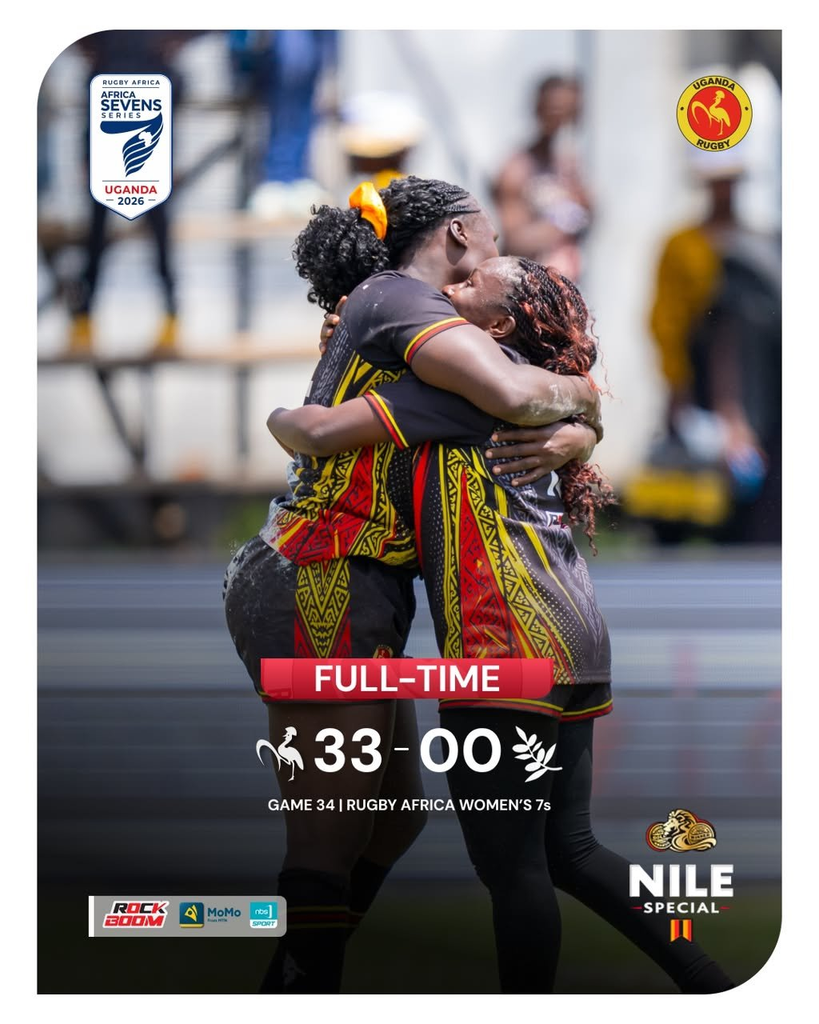
Sunday’s 33-0 victory over Tunisia delivered their first Rugby Africa Women’s Sevens title and qualification for HSBC SVNS 3 in Dubai.
The immediate reward is an opportunity to compete for promotion, with the November 27–28 tournament offering two places in the next division.
For coach Charles Onen’s side, that gives the celebrations in Nairobi a clear direction: preparing to make their African success count beyond the continent.
Dubai raises the stakes

Uganda join China, Mexico, Poland, Colombia and Samoa in the six-team women’s competition at The Sevens Stadium.
The top two will advance to HSBC SVNS 2, opening access to a three-event campaign in Nairobi, Montevideo and São Paulo in early 2027.
That makes Dubai an important opportunity to secure more international competition and continue progressing through World Rugby’s global sevens structure.
Qualification would also bring Uganda back to the city of their continental triumph, with Nairobi hosting the opening SVNS 2 round on January 23–24.
Montevideo follows on February 20–21 before the competition moves to São Paulo the following weekend.
For the Lady Cranes, the task extends beyond recovering from a demanding weekend. They must prepare for a tournament where another strong finish could substantially expand their competitive calendar.
The escape that made history possible
The emphatic final score tells only part of Uganda’s story. Their title challenge almost ended against Kenya in the semi-finals.
Uganda had established a 12-0 lead before the hosts recovered to move 14-12 ahead, leaving the Lady Cranes chasing the game.
With time exhausted, Uganda regained an opportunity and forced a penalty near the Kenyan line. Peace Lekuru reacted with a quick tap and scored the decisive try.
Bushira Namutebi added the conversion to complete a 19-14 victory, transforming a moment of threatened elimination into a place in the final.
That passage offers an important lesson for Dubai. Uganda’s chances will depend on their ability to manage narrow contests as much as their capacity to overwhelm opponents.
They had already negotiated another demanding knockout assignment, defeating South Africa’s Women’s Sevens A side 24-17 in the quarterfinals.
Against Tunisia, Lydia Namabiro scored three tries, while Racheal Mufuwa and Gertrude Kateesa also crossed as Uganda completed their unbeaten campaign. Lekuru was named Player of the Tournament.
Experience delivers
The contributions of Lekuru and Namabiro also underlined the value of the experience available to Onen.
Lekuru returned for the continental tournament after missing the Safari Sevens, alongside Fazira Namukwaya and Juliet Nandawula.
Namabiro, meanwhile, had already demonstrated her attacking threat by finishing the recent Safari Sevens as the leading try and points scorer.
Their influence gives Uganda something concrete to build around, but the short turnaround places a premium on recovery, preparation and keeping the squad ready.
The African title has established a new benchmark for the Lady Cranes. Dubai now offers the chance to turn that breakthrough into a longer international campaign.