

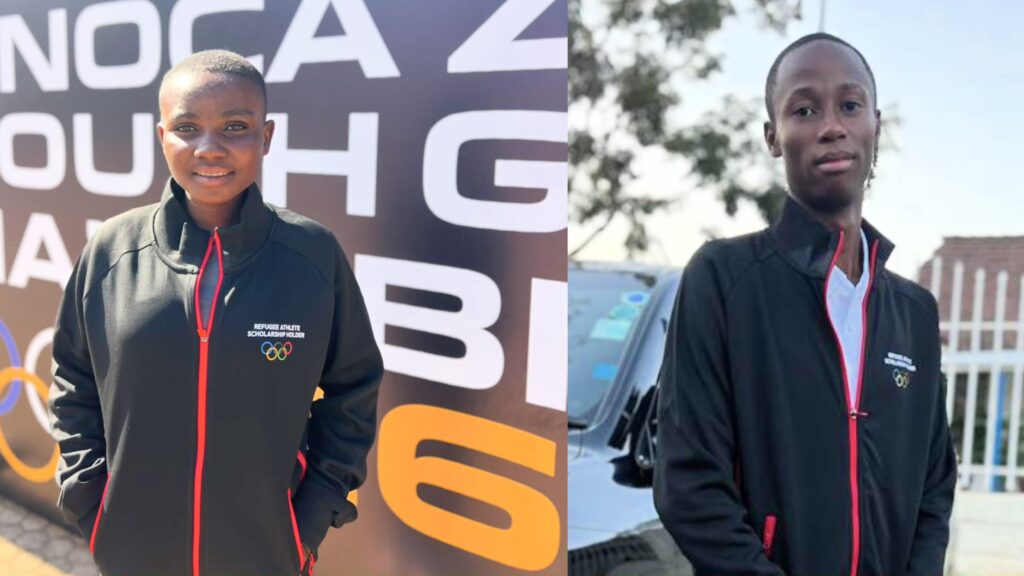
For Florence Masumbe and Rachid Rochene, lining up for the 200m at the Dakar 2026 Youth Olympic Games will represent considerably more than another race.
The two DR Congo-born teenagers, who have developed their athletics in Uganda, will be part of the first Refugee Olympic Team to compete at a Youth Olympic Games.
Masumbe, 17, and Rochene, 16, are among six athletes selected for the historic team, which comprises three girls and three boys based in Uganda and Kenya.
The Uganda-based pair will both compete over 200m, with Masumbe entered in the girls’ event and Rochene in the boys’ race.
Their participation adds another historic layer to Dakar 2026, which will run from October 31 to November 13 and become the first Olympic sporting event staged on African soil.
“These young people have an opportunity to be great ambassadors and represent the millions of young refugees across the world,” Refugee Olympic Team Chef de Mission Yiech Pur Biel said when the team was announced.
Biel, himself a former refugee athlete who competed at the Rio 2016 Olympics, believes Dakar could have an impact extending far beyond the six athletes competing.
“I really believe that Dakar will be a life-changing moment for them, but also for refugees watching them worldwide,” he said.
For Masumbe and Rochene, it is the culmination of a pathway that has taken them from refugee communities and development programmes in Uganda to one of the biggest stages in youth sport.
Masumbe is based in Kamwenge, while Rochene lives in Masajja, Kampala, and both are part of the Game Connect project.
The programme uses sport to promote mental health, social inclusion and development among young people, particularly refugees and members of their host communities.
According to the Uganda Olympic Committee, Game Connect operates in Kampala, Kamwenge, Adjumani and Kyangwali and has reached more than 10,000 young people.
Athletics has provided Masumbe and Rochene with an opportunity to take that development further.
Both have competed at Uganda Athletics Federation championships at Namboole, gaining experience alongside athletes from across the country as they worked towards the international stage.
Their progress eventually placed them on the pathway towards Dakar, including participation at the ANOCA Zone V Games in Nairobi and preparation at the Complete Sports facility in Kaptagat, Kenya.
Their journey has also brought them into contact with Kenyan marathon great Eliud Kipchoge, who has mentored young refugee athletes preparing for Dakar.
Kipchoge believes his role goes beyond improving performances. “I want to show them the way forward,” Kipchoge said. “Refugees are equal to us, and they need to believe it.”
Dakar will nevertheless be different from every competition Masumbe and Rochene have previously experienced.
The Refugee Olympic Team concept was introduced at senior level at the Rio 2016 Olympic Games, providing athletes displaced from their countries with an opportunity to compete on the Olympic stage.
Refugee teams subsequently competed at Tokyo 2020 and Paris 2024, but Dakar will mark the first appearance of a Refugee Olympic Team at the Youth Olympic Games.
The six-member team will compete in athletics, judo and taekwondo, with Masumbe and Rochene among four track and field athletes.
Their inclusion gives Uganda a direct connection to that historic first and provides an example of how organised sport can create opportunities for young people displaced from their countries.
For Masumbe, athletics is already connected to ambitions beyond her own performances.
The 17-year-old, who also enjoys music and dancing, hopes to use sport to inspire other young people in Kamwenge and demonstrate what can emerge from opportunities provided at community level.
Rochene has similarly combined athletics with interests in music, fashion and movies while building his sporting journey in Kampala.
In Dakar, however, their immediate focus will narrow to 200 metres.
The pair will arrive not merely as two teenagers chasing personal bests, but as members of a historic team carrying a wider message about opportunity, inclusion and what sport can offer displaced young people.
From refugee communities in Uganda to the first Youth Olympic Games staged in Africa, Masumbe and Rochene have already travelled an extraordinary sporting path.
When they settle into their starting blocks in Dakar, the stopwatch will measure only a few seconds, but their journey to the start line tells a much bigger story.